Choosing the Right Frame and Shadow Box Dimensions
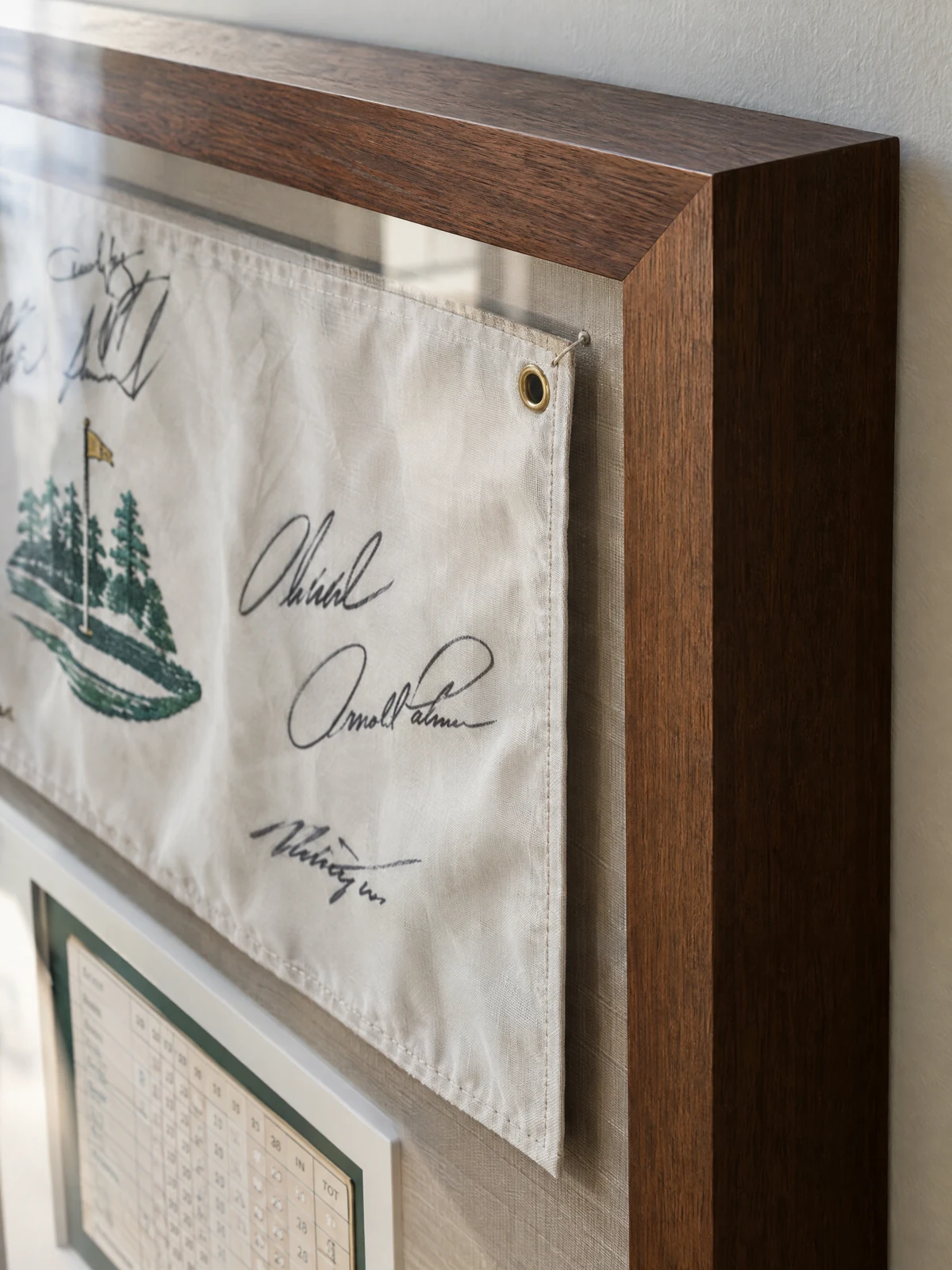
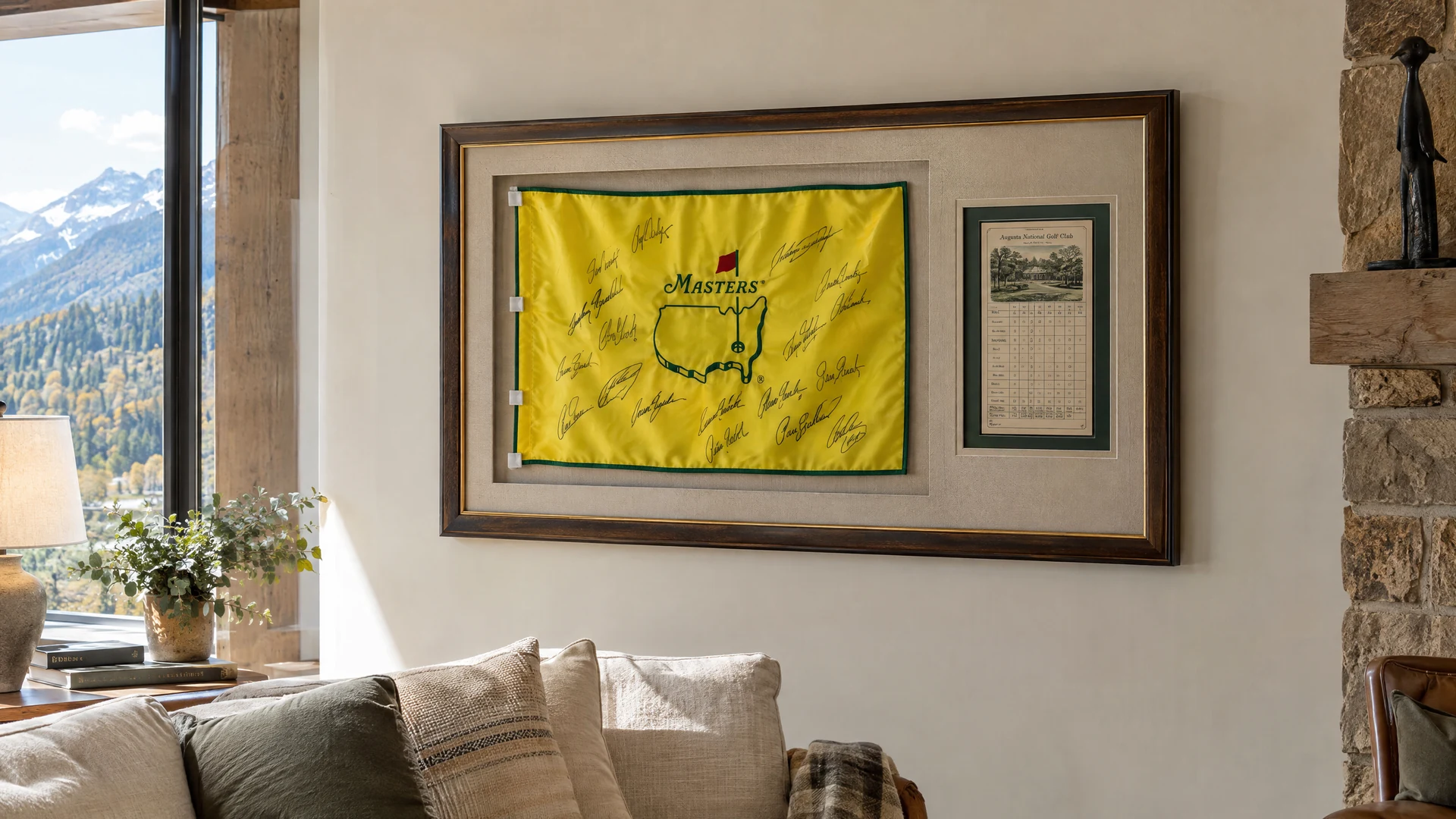
A signed golf flag presents framing challenges due to its size, fabric texture, and the potential addition of a scorecard or other memorabilia. Selecting a shadow box that comfortably accommodates both the flag and any extras prevents overcrowding and ensures a clean visual presentation. Typically, deeper shadow boxes, often 2 to 3 inches deep, are needed to handle the thickness of folded or creased fabric and mounted scorecards without compressing the items.
When consulting with a custom framer, measure your flag’s dimensions carefully, noting any folds or creases that should remain visible to maintain authenticity. Decide if you want the flag fully visible or partially folded to reveal the player’s signature or signatures prominently. Adding a scorecard or photos usually requires a larger shadow box to allow a balanced layout that avoids clutter and does not detract from the flag itself.
Mounting Options: Preserving Fabric Integrity and Visibility
Mounting a golf flag requires methods that support delicate fabric without causing damage or permanent alteration. Most expert framers use archival-quality, acid-free materials to protect the flag from discoloration or degradation over time. Avoid direct adhesive contact with the fabric, as this can weaken fibers or cause stains and spotting.
Common mounting techniques include sewing or pinning the flag onto a fabric-covered foam board or using corner tabs designed for textile mounting. These methods allow the flag to remain taut but not stretched unnaturally, preserving original creases and texture. Discuss the mounting method carefully with your framer, especially if the flag is signed, since some signatures are sensitive to handling or pressure.
Including the Scorecard: Pros, Cons, and Layout Considerations
Incorporating the original scorecard alongside the flag adds context and memorabilia value to the display but also introduces layout complexity. Scorecards are usually thin and flat, but they can vary in size and condition, so it’s essential to decide how prominently it should feature in the frame. Placing the scorecard detached but adjacent to the flag can create a compelling story panel without competing for attention.
However, scorecards can be fragile and prone to fading, so archival UV-protective glass and acid-free backing are recommended to slow deterioration. Some owners prefer to reproduce the scorecard digitally and include a high-quality copy rather than the original to minimize risk. Your framing expert in Greenwood Village can help assess the scorecard’s condition and recommend practical display options.
Selecting Glazing and Matting Materials for Protection and Style
Choosing suitable glazing is critical since the frame needs to protect the flag and scorecard from UV light, dust, and environmental damage. Museum-grade, UV-filtering glass or acrylic options are preferred, as they significantly reduce ultraviolet exposure that can fade signatures and paper alike. Acrylic is lighter and shatter-resistant but may scratch more easily; glass offers superior clarity but can be heavy and fragile.
Matting adds visual focus and prevents the fabric from pressing directly against the glass. Acid-free mats with clean edges and neutral tones work well to highlight signatures and maintain a classic look. Some clients opt for double mats or colored mats that contrast subtly with team colors or tournament branding, which can enhance the overall presentation without distracting from the memorabilia.
What to Bring to Your Framing Consultation and Key Questions to Ask
When visiting a custom framer like Masten Fine Framing in Greenwood Village, bring the signed golf flag, the scorecard if you plan to include it, and any photos or additional memorabilia you wish to display. Photographs of the venue or tournament can also help the framer understand your vision and incorporate appropriate stylistic choices.
Be prepared to discuss your priorities clearly: preservation versus display prominence, budget constraints, and wall space where you intend to hang the piece. Ask about archival materials, framing depth options, and whether the framer recommends including UV protection for your particular items. Inquire about warranties on colorfastness or frame durability, as well as turnaround times for custom shadow boxes.
Avoiding Common Mistakes When Framing Golf Flags
One frequent error is choosing a frame that is too shallow, which can compress the fabric or cause wrinkles, distorting the flag’s appearance. Always prioritize depth to allow natural fabric shape and prevent damage.
Another pitfall is using non-archival mats or backing, which may cause yellowing or acid damage to both fabric and paper memorabilia over time. Ask explicitly about acid-free materials.
Finally, avoid placing the flag too close to glazing without a protective mount, as condensation or pressure can harm signatures and fabric fibers. Confirm that the frame provides an adequate air gap or mounting spacer before finalizing your choice.